
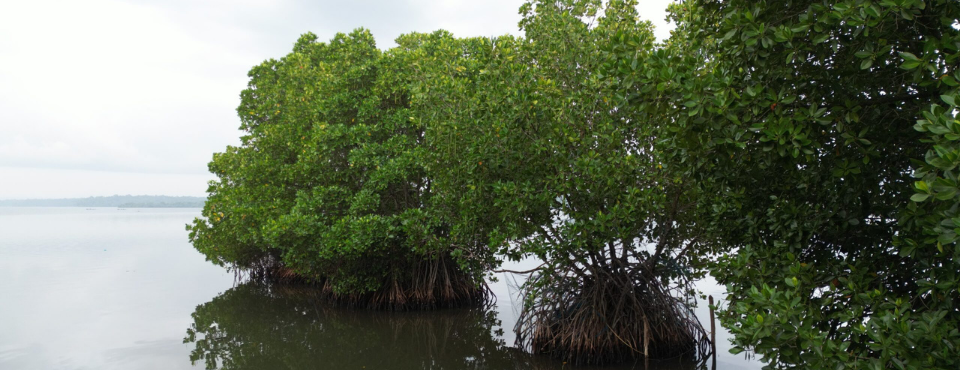
Wetlands as Nature-based solution for disaster risk reduction
Wetlands are crucial for enhancing disaster resilience. They function as natural infrastructure that protects communities against extreme events.
Degradation and loss of wetlands undermine societal resilience in multiple ways, exposing people to longer-term risks such as a reduced capacity to buffer floods, storms, and droughts. The need to address poverty, food and water insecurity, and climate-induced threats has often favoured infrastructure-centric solutions, which deliver short-term gains but diminish the capability of wetlands to support human well-being.
Integrating wetlands into local plans and programmes ensures their contribution to disaster resilience is recognised alongside other sectors. We therefore build sector partnerships (such as those with Disaster Management) to communicate the role of wetlands across multiple sector outcomes. Additionally, we strive to strengthen the knowledge base and tools needed to embed wetlands in sector plans and programmes. We also focus on developing the capacity of sector partners and stakeholders to work with wetlands and build synergies with sector plans and programmes.
Our Impact

- Developed a guidance module on integrating wetlands as Nature-based Solutions into District Disaster Management Plans, with the National Institute of Disaster Management
- Co-developed Wetlands and Disaster Risk Reduction: A Guide for Wetland Managers in the Asia-Oceania Region, with UNEP, RRC-EA, and WWF

- Integrated wetlands as non-structural measures for reducing disaster risks in the District Disaster Management Plan of Ganjam district, Odisha.
- Championed ecosystem rehabilitation and management as a core component of post-disaster relief and reconstruction after the Indian Ocean Tsunami, partnering with over 25 civil society organisations to build replicable models