

Over the Himalayas: How Waterbirds Find Their Way to South Asia
-
Asian Waterbird Census
-
Asian Waterbird Census India
Every winter, millions of ducks, geese, gulls, cranes and shorebirds pour into the wetlands of India, Pakistan, Bangladesh and Sri Lanka. Many have flown from the Russian Arctic or the steppes of Central Asia. Standing in their way is the greatest wall on Earth: the Himalayas and the Tibetan Plateau.
How do they get past it? A new review in the journal Avian Research pieces together hundreds of satellite and GPS tracks to draw the clearest map yet of the routes these birds take.
The overlooked flyway
World’s bird migrations generally follow nine flyways. The Central Asian Flyway, which covers much of South Asia, spans 30 countries, from the Arctic coast of Russia down to southern India, Sri Lanka and the Maldives. Unlike other flyways, it has almost no sea crossings. Instead, birds face a gauntlet of land barriers: the Gobi and Taklamakan deserts, a Tibetan Plateau averaging 4,500 metres, and a Himalayan range 2,500 km long with peaks well above 6,000 metres. Sadly, as much as 51% of the flyway’s waterbird populations are declining.
Stitching the tracks together
The team, led by Gayomini Panagoda and Sampath Seneviratne of the University of Colombo with colleagues in China, Bangladesh, India and the Netherlands (Dr Taej Mundkur, Senior Advisor, Wetlands International), gathered tracking data from published studies, reports and their own Sri Lankan tagging project.
The result was more than 340 migration tracks. The team then mapped where 243 tracks of 19 species bound for South Asia bunched together, giving each species equal weight so that a few heavily tracked birds would not skew the picture.
Three highways and a shortcut
The results reveal three broad corridors within the Central Asian Flyway. The Western Asian Lowland Corridor skirts the mountains to the west, through Iran, Afghanistan and Pakistan, then follows the Indus and India’s west coast south. Cranes, godwits and Arctic-breeding gulls favour this corridor. Thesecond is the Pamir–Karakoram Corridor which threads through high valleys and passes such as the 4,730-metre Khunjerab Pass. Bar-headed Geese, ducks and Black Storks frequent this corridor. The Eastern Himalayan Corridor crosses the high-altitude wetland dotted eastern Tibetan Plateau, then slips through the Brahmaputra valley and the Sikkim–Bhutan passes, or loops around the mountains via northeast India and Myanmar.
Then there is the shortcut: straight over the central Himalaya. Bar-headed Geese have been tracked at about 7,290 metres and a Demoiselle Crane at 7,365 metres. Black-tailed Godwits flew at 6,000 to 7,500 metres, and Brown-headed Gulls passed over ground 6,000 metres high near Everest. Many others funnel through deep gorges such as Nepal’s Kali Gandaki.
The routes are not fixed lanes. Demoiselle Cranes fly south over the Himalaya but return north around the western end. Brown-headed Gulls migrate down one coast of India and travel back up the other.
Tagging them between 2020 and 2025 revealed remarkable journeys. Heuglin’s Gulls commute between Mannar and the Yamal Peninsula in the Russian Arctic, linking the Indian and Arctic Oceans. Brown-headed Gulls fly over the Himalaya to breed on the Tibetan Plateau. Marked birds also tie the island to Australia, the Seychelles and Europe: one Curlew Sandpiper ringed in Tamil Nadu was later photographed in the United Kingdom.
Why it matters
The flyway’s wetlands are under stress due to farming, aquaculture, cities, pollution and climate change. Because the birds depend on a chain of connected wetland, saving a lagoon in Sri Lanka helps little if the high altitude they refuel at in Tibet or along the Indus disappear.
The authors call for conservation planned across the whole flyway rather than site by site. They also want more tracking, especially of smaller species and in barely studied countries such as Afghanistan, Pakistan, Nepal, Bhutan and the Central Asian republics.
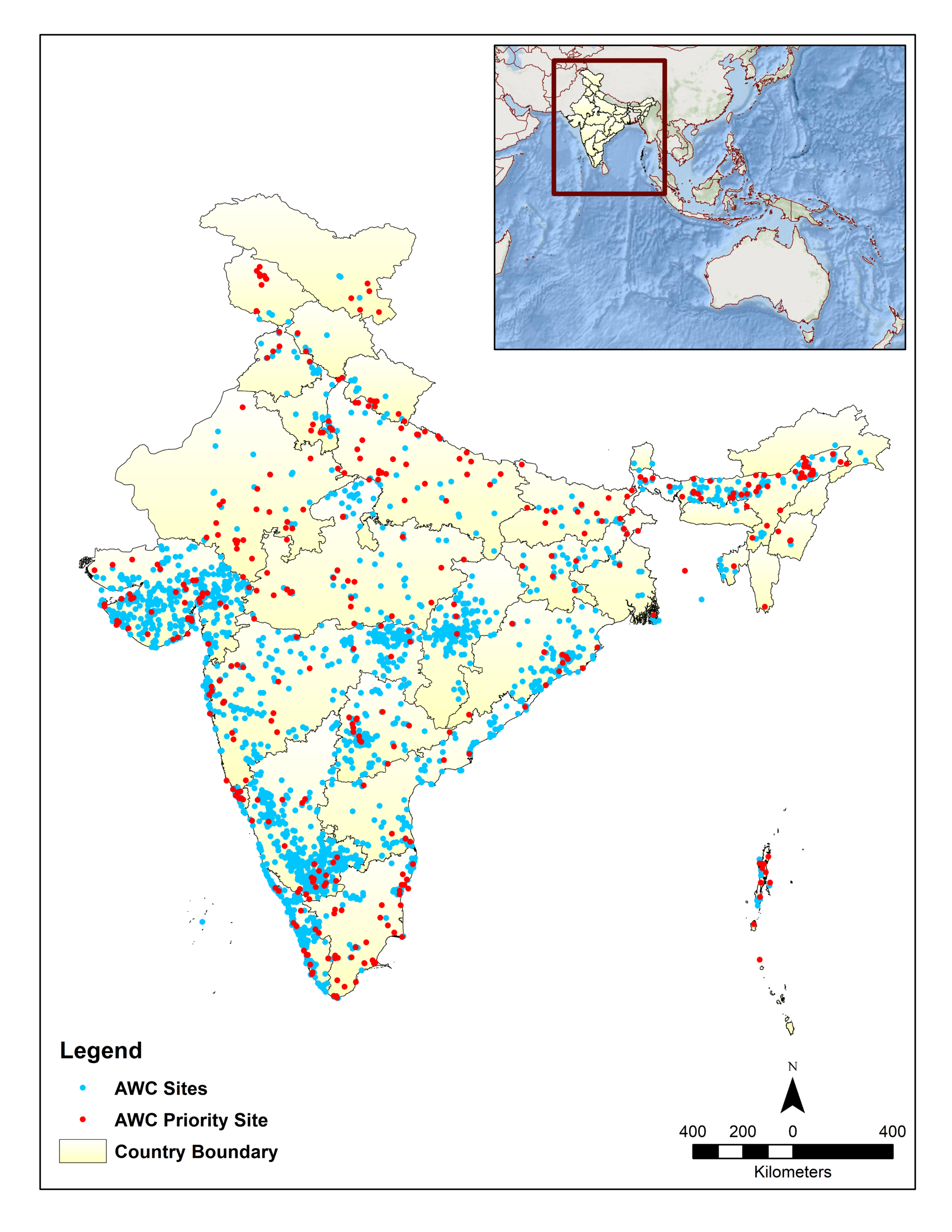
Wetlands International South Asia plays a key role in strengthening waterbird conservation along the Central Asian Flyway through the coordination of the Asian Waterbird Census in India, in collaboration with the Bombay Natural History Society (BNHS). By supporting long-term waterbird monitoring, citizen science, wetland assessments and partnerships with government agencies and local communities, the organisation contributes to building the scientific evidence and institutional capacity needed for coordinated conservation of migratory waterbirds and their habitats across the flyway. It has also contributed technical and scientific expertise to the development of India’s National Action Plan for Conservation of Migratory Birds and their Habitats along the Central Asian Flyway, supporting a coordinated national approach to protecting migratory waterbirds and their critical habitats.
Dr. Taej Mundkur, International Waterbird Census Coordinator and Senior Advisor for Wetlands International
Different species of migratory birds in the CAF have specific migratory routes, corridors and critical wetland sites to complete their annual migration cycles, their conservation needs to be based on sound evidence. As we currently have a very limited understanding of this for most migratory species, we urgently need to upscale and strengthen targeted multi-year research, especially through tracking and field monitoring.
Dhruv Verma, Asian Waterbird Census National Coordinator and Programme Head for Wetlands International
India’s wetlands are important stopover and wintering habitats for migratory waterbirds along the Central Asian Flyway, including those crossing the formidable Himalayan range. These wetlands form an interconnected network that supports birds throughout their annual migration. Understanding how birds use this network requires sustained monitoring across sites and seasons. Citizen science initiatives such as the Asian Waterbird Census play an important role in documenting waterbird populations, identifying changes in their distribution and informing wetland conservation priorities across India.
Source: Panagoda, G. et al. (2027). New perspectives on waterbird migratory corridors in the Central Asian Flyway, with a focus on the role of the Himalayas and the Tibet Plateau in shaping connectivity. Avian Research 18, 100443. doi.org/10.1016/j.avrs.2026.100443
– Dr Ritesh Kumar & Dhruv Verma