
Safeguarding wetland carbon
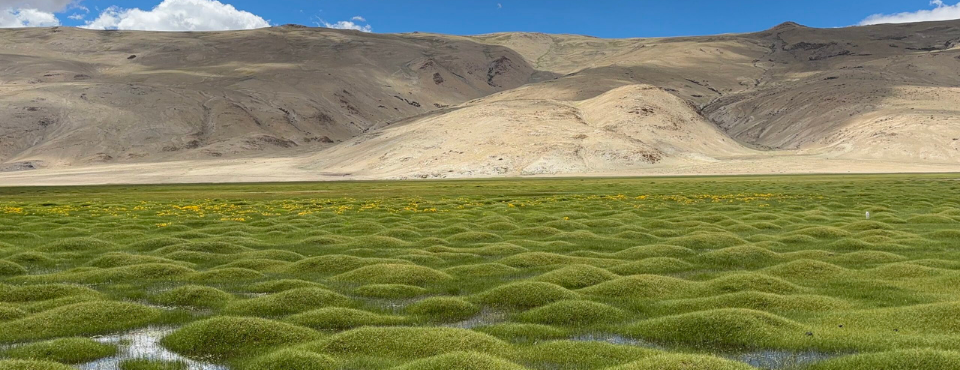
Wetlands are some of the most effective and efficient natural carbon sinks. When managed effectively, these ecosystems can store carbon at rates far exceeding those of other terrestrial systems.
If degraded or drained, the wetlands become potent sources of greenhouse gas emissions. Despite their crucial role in sequestering carbon and regulating greenhouse gas emissions, these ecosystems remain under-recognised in national climate change policies and related programmes.
Wetlands International South Asia’s work has focused on developing catalytic knowledge on the carbon storage potential of Indian wetlands and tools to assess and plan for risks to wetlands induced by climate change. Through our work, we envisage demonstrating how wetlands can significantly contribute to both climate change mitigation and adaptation, while also enhancing ecosystem resilience and supporting sustainable development.
Our Impact

- Developed India’s first peatlands probability map for the Indian Himalayas and North-East biogeographic zones
- Conducted a climate vulnerability assessment of Indian wetlands; results were included in India’s Third National Communication to the UNFCCC
- Designed a tool to assess climate risks and vulnerability, enabling identification of specific threats and design of mitigation and adaptation measures.
- Developed the first-of-its-kind Tier I GHG flux assessment for Indian wetlands, supporting their inclusion in national reporting to the UNFCCC
- Designed a tool to assess the adaptation co-benefits of wetlands management, helping managers identify specific climate adaptation benefits
- Supported the integration of wetlands into the National Adaptation Plan.
- Founding member and co-anchor of the Global Mangrove Alliance – India Chapter