
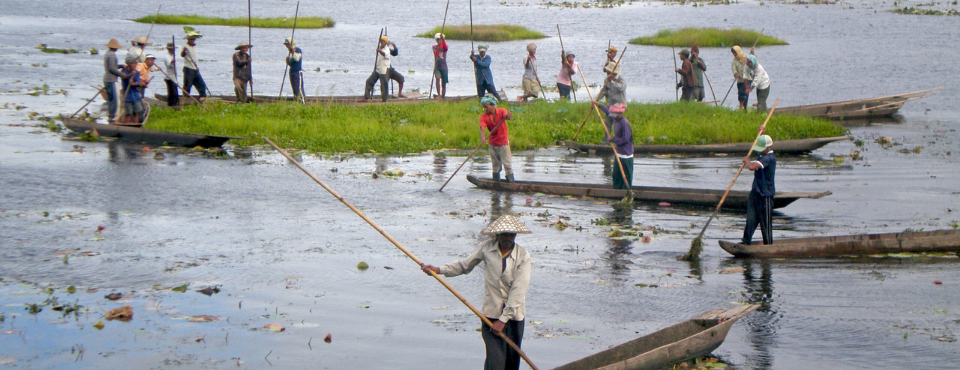
Nurturing wetlands livelihoods
Wetlands are multifunctional ecosystems that support the livelihoods of the communities that depend on them.
It is estimated that 6% of India’s population, roughly 85 million people, directly depend on wetlands for their livelihoods, including agriculture, tourism, and harvest of wetland products such as fish, rice, foxnuts, chestnuts, clams, and salt. Maintaining wetland values and functions while sustaining human well-being, both now and in the future, requires approaches that recognise the deep connections between livelihoods, wetland functioning, and biodiversity. This forms the core of the Ramsar Convention’s wise-use concept, and of India’s whole-of-society approach to wetlands conservation under the National Wetlands Programme.
Wetlands International South Asia works to strengthen the livelihoods of wetland communities and build the capabilities and assets essential to their economic and social well-being. A central element of this work is mainstreaming wetlands into development plans, programmes, and investments at every level.
Our Impact

- Conducted an economic analysis of the trade-offs of land-use transformation and its distributional impacts, balancing multiple uses in Kabartal, Bihar under The Economics of Ecosystems and Biodiversity – India Initiative

- Embedded livelihood interventions into the Integrated Management Plans of 25 Ramsar Sites

- Organised capacity-building programmes for rural development professionals in partnership with the National Institute of Rural Development and Panchayati Raj