
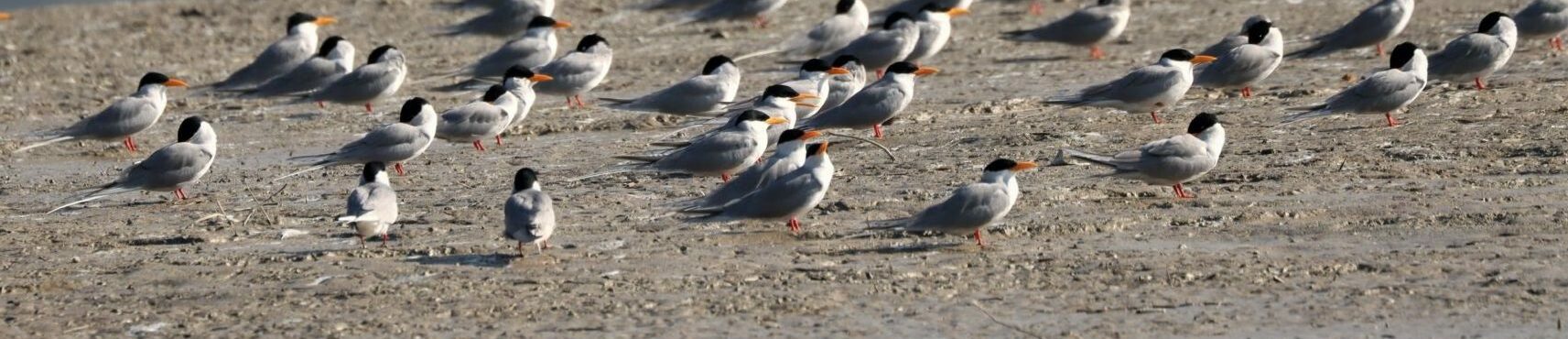
Asian Waterbird Census 2026
-
Asian Waterbird Census
The annual Asian Waterbird Census (AWC) is part of the global International Waterbird Census (IWC). This citizen-science programme supports the conservation and management of wetlands and waterbirds worldwide.
2026 will be the 40th AWC and 60th IWC, so it will be a special year to contribute to the census.
The recommended dates for the AWC are 03 – 18 January 2026, covering two weeks and three weekends, when we should encourage you to count waterbirds. These dates are for guidance only and counts from any date between December 2025 and February 2026 are very welcome.
Downloads
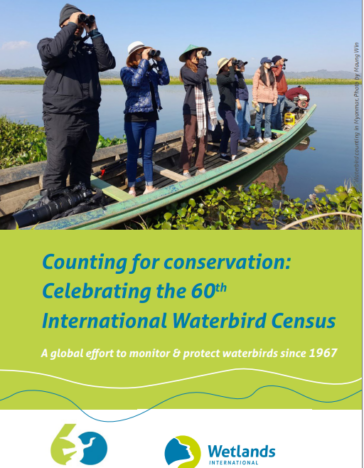
Participate in the AWC 2026 count programme!
Your information helps to promote the designation and management of internationally important sites such as nationally and locally protected areas, Ramsar Sites, Western/Central Asian Site Network for Siberian Cranes and Other Waterbirds, East Asian – Australasian Flyway Network Sites, ASEAN Heritage Parks, World Heritage Sites and Important Bird and Biodiversity Areas (IBAs). This helps in identifying and protecting new sites of importance for waterbirds. The results of the census and information are also used to promote national waterbird and wetland conservation and international cooperation along the Central Asian Flyway and East Asian– Australasian Flyway. You can find several outputs from the annual AWC on the International Waterbird Census data portal, including Species and Country/Region count totals from the last 5 years and maps of AWC sites.
Guidance and Reporting
If you have participated in a previous count for a particular site, kindly cover the same site this year and report on it using the latest count and wetland assessment submission forms. We encourage you to cover as many sites as possible and encourage more participation. Submission of forms to the appropriate coordinator should be done by the end of February 2026 at the latest.
Protocol for waterbird counting: A general introduction to counting waterbirds for the International Waterbird Census. You are engaged to follow these in conducting your counts.
Digitising Site Boundaries: Drawing the boundaries of a site or count area on a map is key to ensuring consistent coverage from year to year. This is a simple guide to the various options to make digital boundaries for sites and submit these with your counts to your coordinator. Site boundaries are available here and can help guide your counts.
Counting and reporting across countries/regions in Asia-Australasia (only for India, please see the new AWC India page)
AWC submissions through national count forms/scheme and the Asian Waterbird Census Wetland Assessment Google Form
AWC participants should contact their national/regional coordinators to seek information on other forms and protocols to be followed. Check for the contact details of your AWC National/regional coordinator here.
Counts recorded on eBird can also be shared with the eBird handle Asian Waterbird Census. In addition to the waterbird count information, for AWC 2026, we continue to use the Wetland Assessment Form for participants to submit standardized information on the status and potential threats to wetlands and waterbirds observed on their visit. This complements the waterbird count forms you normally submit. We encourage you to submit an entry for each site you cover. National/regional coordinators will be able to summarize these in their reports and we intend to prepare an annual regional summary.
AWC Count & Wetland Assessment Entry Form
Click the link for the AWC Count Wetland Assessment Form for Asia-Australasia.
We have an AWC Count Wetland Assessment Entry Form (Excel format) with a list of sites uploaded to the IWC online database. Here the counter can use the dropdown menu option to enter the waterbird species. Also check the AWC Site Network map to see if this site has been counted before and if a boundary exists; if so, use this as a guide for your count. If it is a new site or does not have a boundary, we also request that you submit a simple outline/ boundary map of the actual count area. See above guidance to create a digitised site boundary.
Raising awareness for waterbird and wetland conservation
We encourage you to actively raise local awareness of waterbird and wetland conservation issues around the census by contributing to or publishing news items and articles in print and electronic media. Kindly share links to articles to [email protected], so we can help promote them. We also encourage you to use social media (such as Facebook, Twitter, Instagram, and LinkedIn) to actively promote the census and share your findings. We encourage you to include the hashtags #WaterbirdsCount, #AWC, or #AsianWaterbirdCensus where possible and tag us on @WetlandsInt and @EAAFP so we can help to share this widely too.
Generating support for monitoring
Through the global Waterbird Fund www.waterbird.fund, we can now receive dedicated funds to channel to our network to fill geographic gaps and strengthen local capacity to implement and monitor waterbirds, as well as remote wetlands that are not being regularly counted. We aim to target new funding sources to secure contributions to support our network, including conservation organizations, governments, birders, hunters, and their clubs and associations, foundations, as well as the public with an interest in waterbirds and the environment. Do consider promoting the fund and donating to help strengthen monitoring in the region.
We invite your active participation to make this special year count for waterbird and wetland conservation on the ground!
We trust your annual waterbird count and wetland assessments help you to raise local awareness about the importance of conserving wetlands and their waterbirds while contributing to the world’s longest-running biodiversity monitoring programme.
For more information, reach out to Tom Langendoen ([email protected])