
AWC (Asian Waterbird Census)
-
Healthy Wetland Nature
-
Species
View all our Reports & Publications and Newsletters. Check out the Press highlights of the annual AWC in India.
Participate in the AWC 2026 count programme – celebrating AWC40 and IWC60!
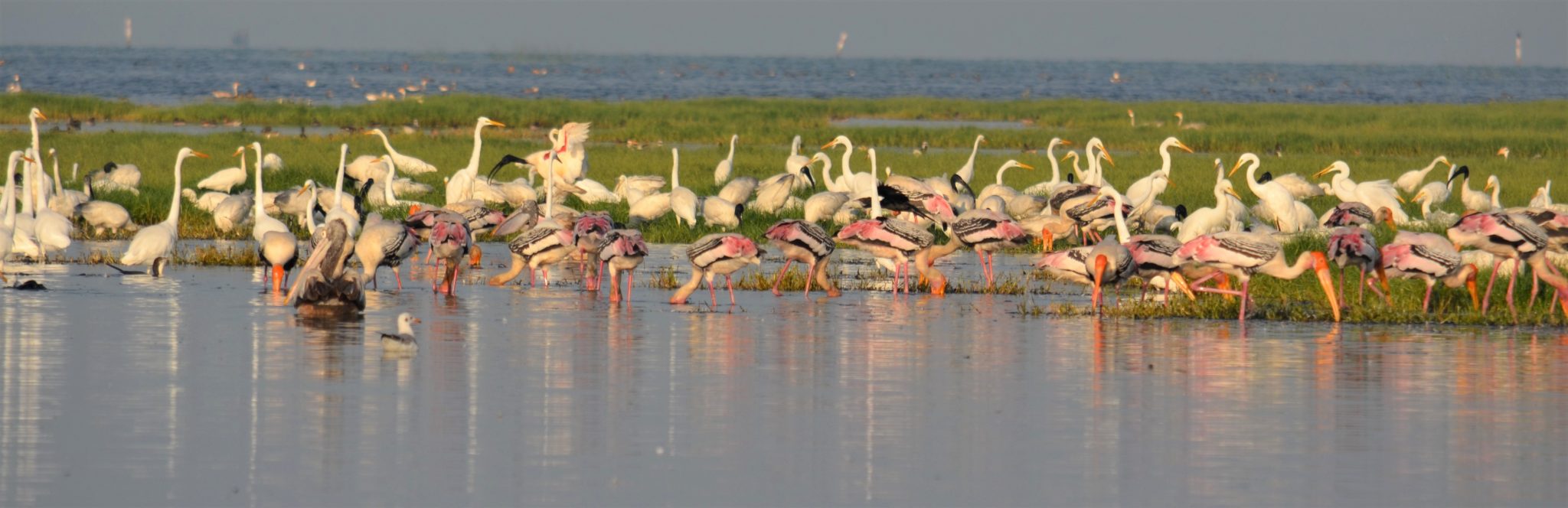
Waterbirds are one of the key indicators of the productivity of wetlands. Wetlands provide feeding, resting, roosting and foraging habitats for these charismatic species. We cooperate with volunteers to assess and monitor the status of populations of waterbirds over time. The information generated is used to identify wetlands of high importance for waterbirds and take conservation measures such as designation as Ramsar Sites and Flyway Network Sites, or inclusion as priority wetlands within national conservation programmes.
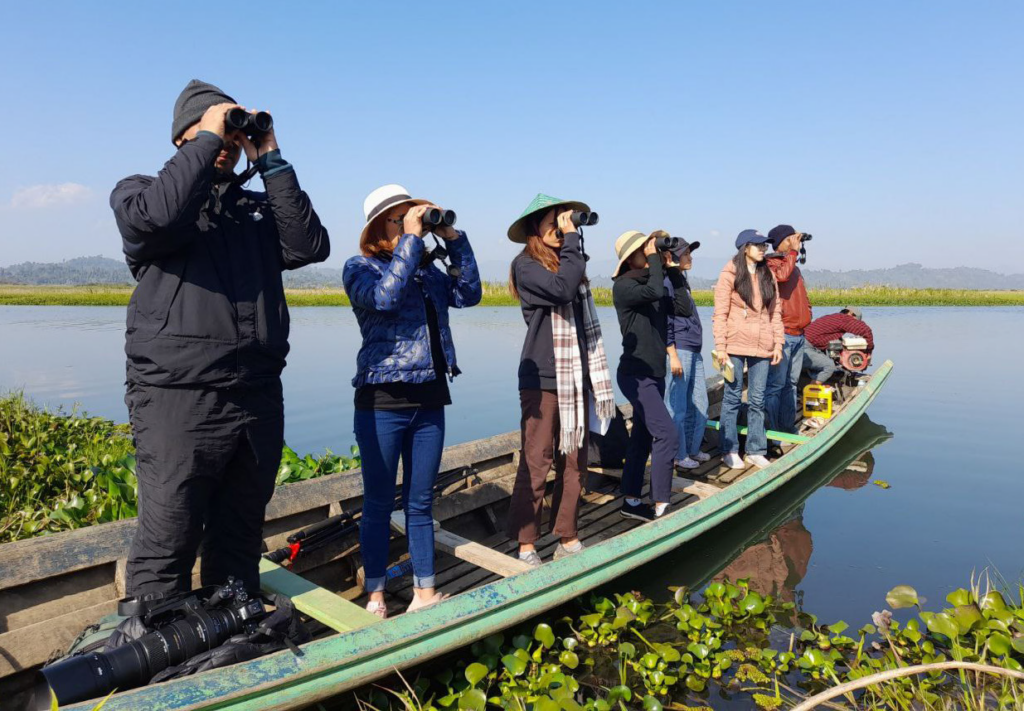
Every January and February, thousands of volunteers across Asia and Australasia visit wetlands in their country and count waterbirds. This citizen science programme is the Asian Waterbird Census (AWC). The AWC is an integral part of the global waterbird monitoring programme, the International Waterbird Census (IWC), coordinated by Wetlands International. It runs in parallel with other regional programmes of the International Waterbird Census in Africa, Europe, West Asia, the Neotropics, and through partners for Central America and the Caribbean.
The AWC was initiated in 1987 in the Indian subcontinent and has since grown rapidly to cover a major region of Asia, from Afghanistan eastwards to Japan, Southeast Asia, and Australasia. The census, thus, covers the entire East Asian – Australasian Flyway and a large part of the Central Asian Flyway.
The census has the following objectives:
- to obtain information on an annual basis of waterbird populations at wetlands in the region during the non-breeding period of most species (January), as a basis for evaluation of sites and monitoring of populations
- to monitor on an annual basis the status and condition of wetlands
- to encourage greater interest in waterbirds and wetlands amongst citizens.
To date, more than 6,100 sites in 27 countries and regions have been covered with the active participation of thousands of volunteers. The information collected is available to a wide range of government agencies and non-government organizations and contributes to conservation activities from the local to global level, including:
- raising awareness of waterbirds and waterbird conservation issues;
- supporting local conservation activities at wetlands;
- the Ramsar Convention on Wetlands, in identifying and monitoring wetlands of international importance;
- the Convention on Migratory Species (CMS), by monitoring the status of migratory waterbirds and their habitats;
- the Convention on Biological Diversity‘s (CBD) goal in conservation and sustainable use of biodiversity;
- implementation of the East Asian-Australasian Flyway Partnership Initiative (EAAFP) and Central Asian Flyway Action Plan through monitoring important and Flyway Network sites;
- BirdLife International’s Important Bird and Biodiversity Areas (IBA) Programme;
- IUCN/BirdLife International’s Global Species Programme (Red List);
- Wetlands International’s Waterbird Population Estimates programme
Monitoring Results
Summaries of all AWC counts are updated annually on our interactive and publicly accessible International Waterbird Census website. They are accessible as national/regional totals and species totals. All sites covered by AWC participants in the past three decades have been represented as an interactive AWC site network map. Have a look at these to know more about waterbird populations and AWC coverage in the region of your interest.
Guidance and Reporting
The recommended days for the annual AWC cover two weeks and three weekends, beginning on the first Saturday every January, when we should encourage you to count waterbirds. These dates are for guidance and counts from any date between the beginning of December and to end of February are very welcome.
We offer basic information to census waterbirds and assess wetlands in a standardized manner and submit the results using a range of formats.
Protocol for waterbird counting: A general introduction to counting waterbirds for the International Waterbird Census.
Digitising Site Boundaries: Drawing the boundaries of a site or count area on a map is key to ensuring consistent coverage from year to year. This is a simple guide to the various options to make digital boundaries for sites and submit these with your counts. All AWC sites submitted to Wetland International with site boundaries or a simple latitude and longitude are visible on the IWC Portal. Zoom in to see your site.
AWC participants should contact their national/regional coordinators to seek information on count forms and protocols to be followed. Check here for contact details of your AWC National/regional coordinator.
For submission of counts and wetland assessments, we produce annually updated AWC Count & Wetland Assessment Excel Forms and AWC Wetland Assessment Google Forms that may be used where no national forms are available. These annual updates are made available for download on our website in advance of the January counts; see here for AWC 2026.
If you have participated in a previous count for a particular site, kindly cover the site each year and report on it using the latest count submission forms. We encourage you to cover as many sites as possible and encourage more participation. Submission of forms to your Coordinators should be done by the end of February at the latest.
Generating support for monitoring
Through the newly established global Waterbird Fund www.waterbird.fund, we can now receive dedicated funds to channel to our network to fill geographic gaps, strengthen local capacity to implement monitoring of waterbirds, as well as remote wetlands that are not being regularly counted. We aim to target new funding sources to secure contributions to support our network, including conservation organisations, governments, birders, hunters and their clubs and associations, foundations, as well as the public with an interest in waterbirds and the environment. Do consider promoting the fund and making a donation to help strengthen monitoring in the region.
AWC Contacts
Contact your AWC National/regional coordinators to participate.
For more information on the AWC, to participate in or support it, please drop a mail to [email protected].