

World Wetlands Day 2026: Traditional Knowledge Must Guide India’s Wetland Governance, Say Experts
-
Capacity development
-
Other topics
-
World Wetlands Day
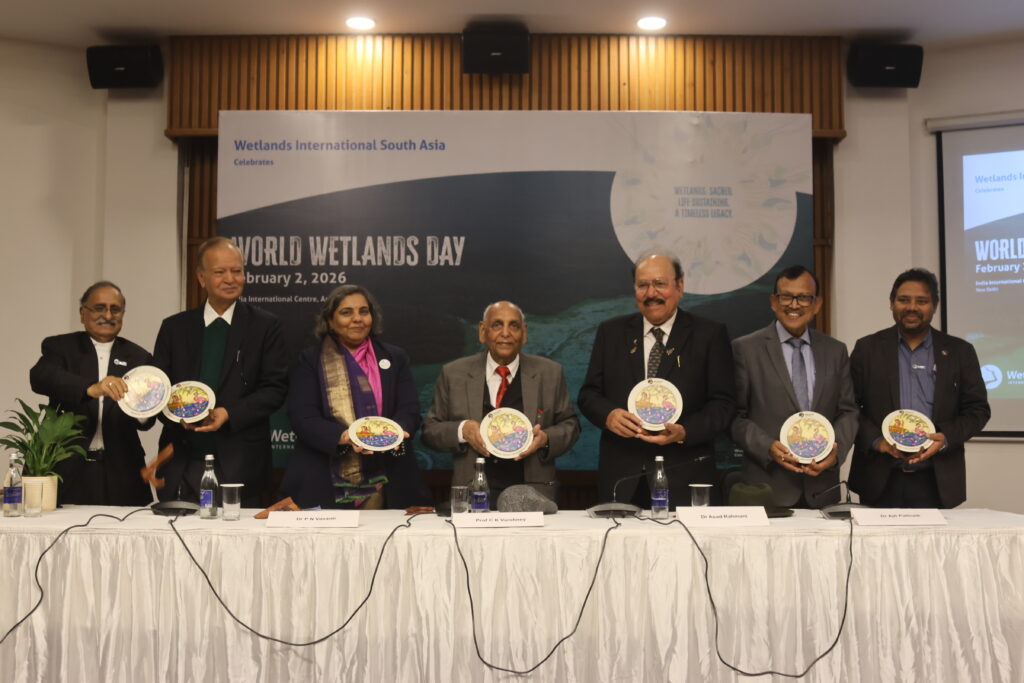
Wetlands are not just ecosystems but living cultural landscapes shaped by centuries of human knowledge, practice, and stewardship, speakers emphasised at a public event organised by Wetlands International South Asia to mark World Wetlands Day 2026. The event, held at Lecture Hall I, India International Centre Annexe, New Delhi, centred on the global theme “Wetlands and traditional knowledge: Celebrating cultural heritage.”
World Wetlands Day is observed annually on 2 February to commemorate the adoption of the Ramsar Convention on Wetlands in 1971, the principal international treaty guiding wetland conservation and wise use.
Delivering the keynote address, the chief guest, Dr Balakrishna Pisupati, Head, United Nations Environment Programme (UNEP) – India, underlined the deep cultural and civilisational connections between people and wetlands.
Wetlands are civilisations in water. They are inseparable from culture, livelihoods, food systems, and human wellbeing.
Dr Balakrishna Pisupati highlighted the Ramsar Convention as a critical enabling framework and called for stronger mainstreaming of traditional knowledge across biodiversity, climate, health, and food security policies. Referring to Indian legal instruments such as the Biological Diversity Act, People’s Biodiversity Registers, and Biodiversity Heritage Sites, he urged their more effective use to recognise and safeguard community knowledge systems.
The event featured a panel discussion on “Strengthening wetlands regulation and governance in India”, bringing together leading experts, including Dr Asad Rahmani, Dr Ajit Pattnaik, and Dr P. N. Vasanti, and was chaired by Prof C. K. Varshney, President, Wetlands International South Asia. The discussion examined gaps in enforcement, fragmented institutional responsibilities, limited public awareness, and the urgent need for science-based, participatory, and culturally informed management.
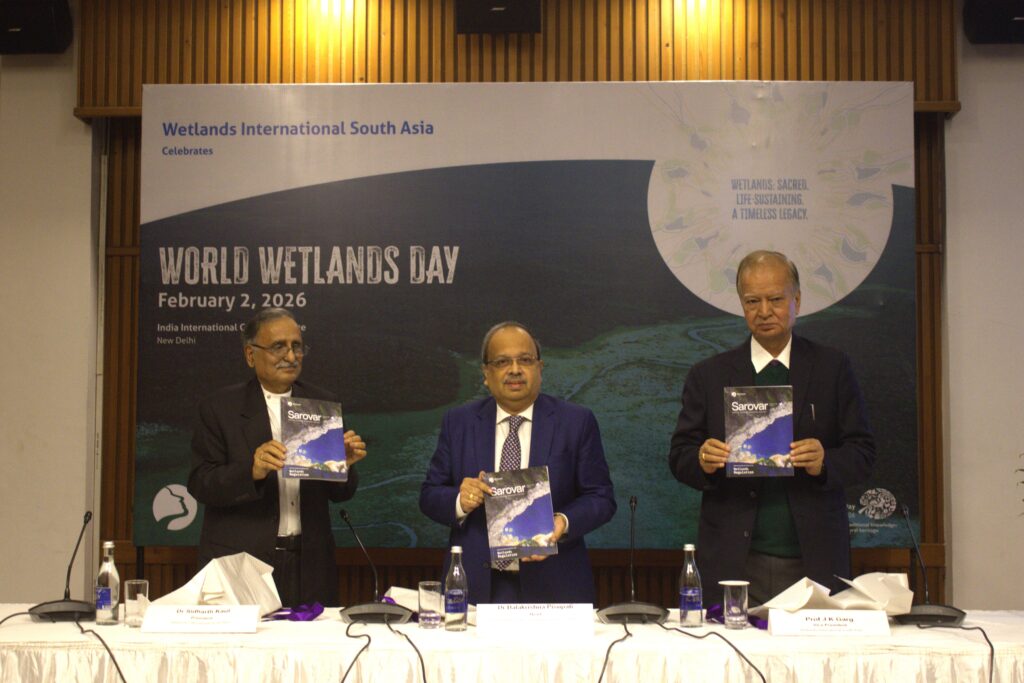
Addressing the gathering, Prof C. K. Varshney stressed that conservation efforts must move beyond symbolic recognition to meaningful action on the ground.
“Ramsar designation or legal notification should be the beginning of conservation, not the end,” he said. “India’s wetlands will only survive if governance is strengthened, enforcement is improved, and traditional knowledge is treated as a core asset rather than an afterthought. Wetlands demand catchment-scale thinking and active community participation.”
Earlier, welcoming participants, Dr Ritesh Kumar, Director, Wetlands International South Asia, called for sustained dialogue and clearer communication on the ecological and societal rationale for wetland conservation, noting growing pressures from land-use change and hydrological alteration.
The event also saw the release of several publications and technical resources, including Sarovar, Volume X, Wetlands International South Asia’s annual newsletter, technical materials, and three thematic posters focusing on the World Wetlands Day theme, high-altitude wetlands, and integrated wetland management for wise use. These resources aim to strengthen governance, assessment, community engagement, and long-term monitoring.
The programme was attended by 61 participants representing government agencies, international organisations, academia, civil society, expert institutions, and the media. The event concluded with a vote of thanks by Dr Asghar Nawab, Programme Head (Aquatic Ecology), Wetlands International South Asia.