
Wetlands as Nature-based Solution within the WEHE Nexus
-
Capacity development
-
Integrating wetlands in water management
Insights from the Water Transversality Conclave 2026
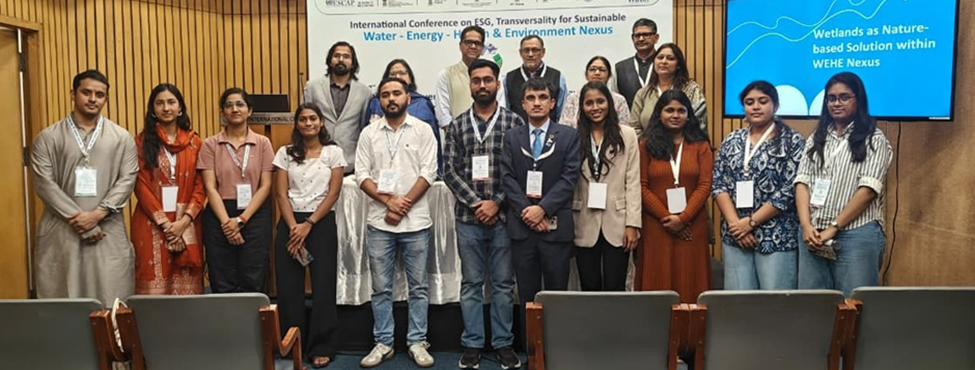
Wetlands are increasingly being recognized not just as ecosystems for biodiversity conservation, but as critical natural infrastructure supporting water security, public health, and climate resilience. This perspective formed the central theme of the session “Wetlands as Nature-based Solutions within the Water, Energy, Health and Environment (WEHE) Nexus”, organized by Wetlands International South Asia (WISA) during the Water Transversality Global Awards and Conclave 2026.
The session brought together experts and practitioners from leading organisations to explore how wetlands can be integrated into cross-sectoral development planning and mainstreamed into water, energy, health, and environmental policies.
Wetlands at the Centre of the WEHE Nexus
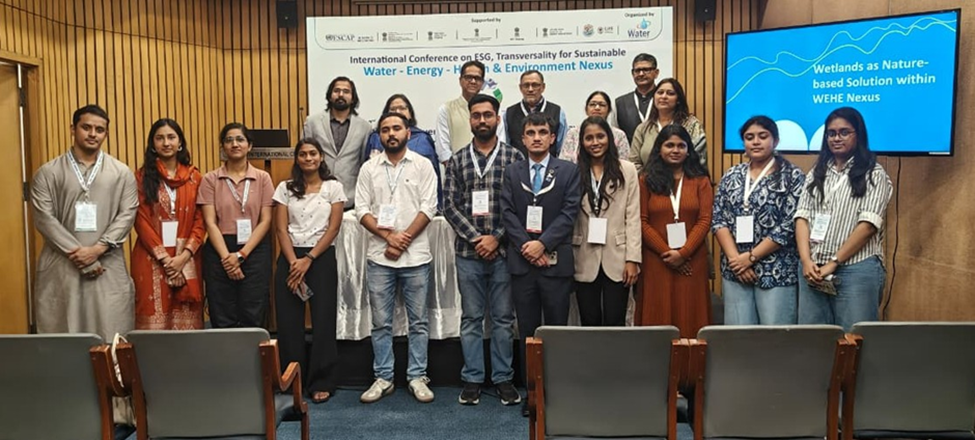
The session opened with a presentation by Mr. Ravi Prakash, Wetlands Specialist at Wetlands International South Asia, who highlighted the multiple ecosystem services provided by wetlands and their relevance across sectors. Wetlands, he noted, are central to the WEHE nexus, supporting water management, energy efficiency, ecological health, and human wellbeing.
Expert Panel: Strengthening Governance and Integration
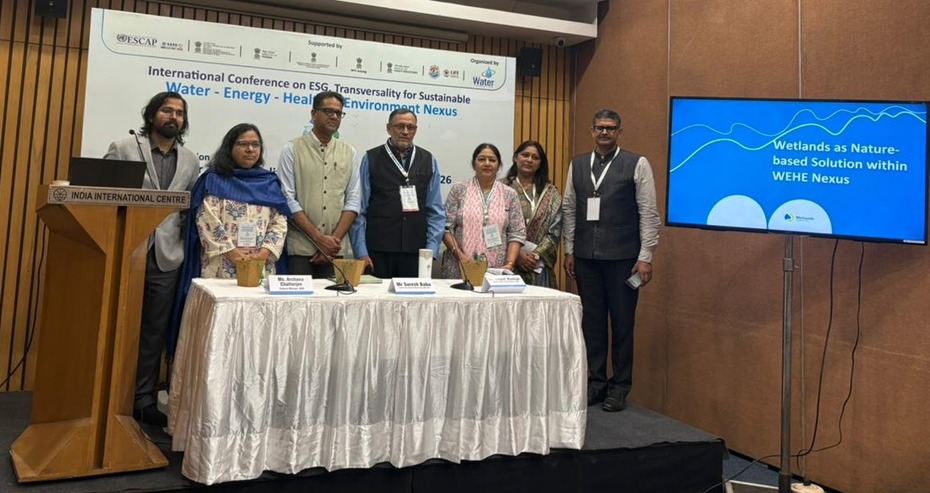
The presentation was followed by a moderated panel discussion featuring experts from IUCN India, WWF-India, and the International Water Management Institute (IWMI). The discussion focused on governance challenges and practical pathways for integrating wetlands into development planning.
Rethinking Wetland Governance
Ms. Archana Chatterjee (IUCN India) emphasized the need to shift the policy narrative around wetlands. She informed that while India now has 98 Ramsar Sites, many wetlands outside protected areas lack clear institutional management and financial support.
She suggested leveraging the Other Effective Area-Based Conservation Measures (OECMs) framework to recognize and manage wetlands across landscapes such as coastal regions, Himalayan ecosystems, and river floodplains. This approach could strengthen conservation outcomes while also supporting local livelihoods.
Understanding Connectivity in Wetland Systems
Mr. Suresh Babu (WWF-India) stressed the importance of understanding wetlands through a “3-D connectivity” lens, which includes the latitudinal, longitudinal, and vertical connections between wetlands, rivers, and floodplains.
He advocated for a hybrid approach that combines nature-based solutions with technological innovations, along with stronger collaboration among institutions that possess technical knowledge. Additionally, he highlighted the important role of Local Self Governments and State Wetland Authorities in bridging governance gaps and enabling integrated action on the ground.
Wetlands and the Circular Water Economy
Dr. Gopal Kumar (IWMI) highlighted the role wetlands can play in enabling a circular water economy. He pointed out that decentralized wastewater treatment systems, including constructed wetlands, could become a critical solution for both rural and urban water management.
Such systems not only treat wastewater naturally but also help support water reuse and enhance local water security.
Pathways for Mainstreaming Wetlands
The session concluded with a strong emphasis on catchment-scale thinking and cross-sectoral integration. Participants highlighted several entry points where wetlands can be systematically incorporated into development programmes and policies:
Policy Integration
During the session, it was suggested that wetlands can be integrated into national programmes such as AMRUT and the Swachh Bharat Mission, particularly as nature-based solutions for rejuvenation and wastewater treatment.
Institutional Strengthening
Empowering State Wetland Authorities, local governments, and district administrations with technical capacity and financial resources is essential to managing wetlands as strategic infrastructure.
Climate and WASH Strategies
Wetlands can play a major role in climate adaptation, flood mitigation, and Water, Sanitation and Hygiene (WASH) initiatives, providing cost-effective and nature-based solutions for resilient cities and communities.
Moving Beyond Recognition to Action
The discussions at the Water Transversality Conclave highlighted a crucial message: wetlands must move beyond symbolic recognition toward active integration into policy, planning, and governance systems. India can simultaneously address challenges related to water security, ecosystem degradation, and climate resilience while improving public health and community livelihoods by treating wetlands as natural infrastructure within the WEHE nexus.
As experts emphasized during the session, the future of wetland conservation lies in integrated, science-based governance supported by strong institutional collaboration and community participation.